VortexAccel
VortexAccel
VortexAccel
Select OEM hardware configurations designed for decentralized computing, real-time analytics, and rugged deployments.
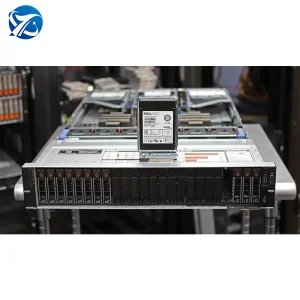
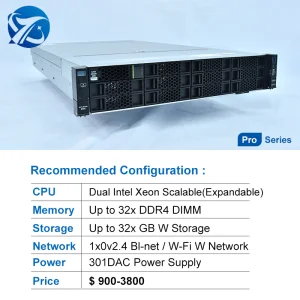
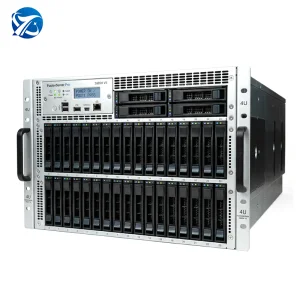
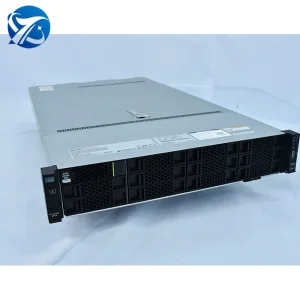
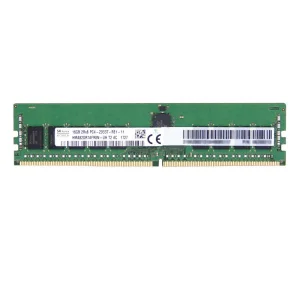
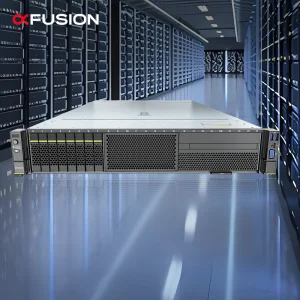
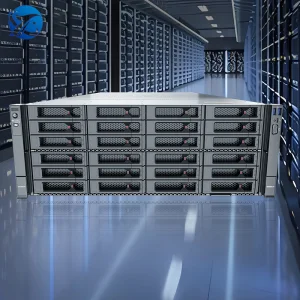
Analyzing the evolution of hardware architecture, real-time workload orchestration, and the critical transition from cloud-only paradigms to robust, hybrid edge-to-core network topologies.
The contemporary enterprise landscape is witnessing a massive, structural transition in computing architecture. For over a decade, centralization within hyperscale cloud facilities was the default path for enterprise virtualization and data management. However, the rise of real-time computer vision, sub-millisecond automated decision loops, and complex industrial telemetry has exposed the limitations of cloud latency, bandwidth consumption, and security profiles.
Today, Edge Computing Devices act as local computation anchors, translating high-frequency physical processes into actionable data without sending massive raw data streams back to centralized servers. In sectors such as manufacturing, defense, utility grids, and autonomous transport, processing data close to the source is not a minor optimization—it is an absolute operational requirement.
By processing workloads at the edge, organizations dramatically lower their network overhead, eliminate latency-related hazards, and conform directly to localized data compliance laws (such as GDPR or localized privacy mandates). Heterogeneous systems carrying specialized neural processing engines (NPUs, GPUs, and FPGAs) enable machine learning models to run local inference loops, providing millisecond detection capabilities that are vital for predictive maintenance and mission-critical operations.
Unlike standard server rooms, physical edge sites are rarely climate-controlled. Edge hardware must operate inside active factory lines, substation cabinets, marine vessels, and vehicular hulls. Consequently, custom OEM edge hardware requires distinct features:
As organizations scale out these decentralized nodes, they face the challenge of sourcing reliable, standard-conforming hardware. This is where specialized original equipment manufacturers (OEMs) and exporters bridge the gap between architectural blueprints and hardened physical deployment.
An industry-recognized AI GPU server manufacturer and infrastructure provider engineered for high-performance enterprise workloads.
Established in March 2016, VortexAccel Systems Ltd (vortexaccel.com) has grown to become a cornerstone OEM/ODM hardware provider for global enterprises. Operating from our state-of-the-art 18,500 square meter facility, we control the entire lifecycle of server design, verification, assembly, and quality validation. Our team of 320 R&D engineers works alongside 42 dedicated quality control specialists to build edge servers that run reliably under demanding operational workloads.
With an annual export revenue reaching $18,600,000 and seven years of export experience, we navigate global customs compliance, logistics, and localized product certifications. We maintain a reliable supply network containing over 860 trusted semiconductor and component suppliers, ensuring stable lead times even during global chip allocation periods.
Transparent window into our ISO-aligned manufacturing floors, thermal stress testing rooms, and GPU load benchmarking stations.


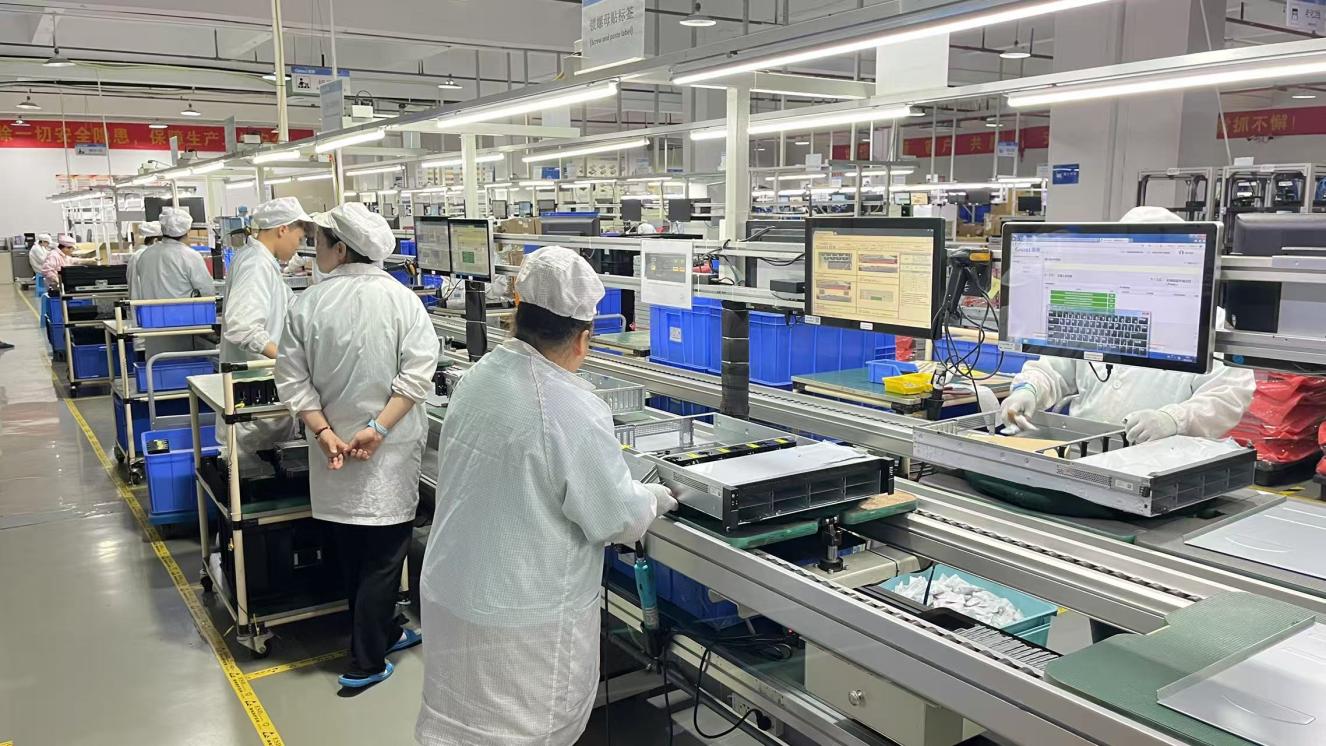
How China-based production ecosystems allow VortexAccel to optimize raw component procurement, accelerate board design iterations, and maintain cost competitiveness.
Our facility is situated in China's high-tech manufacturing corridors, providing us with direct access to regional semiconductor packaging plants, PCB fabrication houses, and precision thermal component providers. This proximity minimizes raw material lead times and reduces overland shipping risks, allowing us to maintain a nimble production pipeline.
Our team of 320 R&D engineers operates in close proximity to our assembly lines. This layout enables us to move from custom customer blueprints to functional prototypes within days rather than weeks. Rapid thermal simulation and hardware-in-the-loop validation speed up the time-to-market for complex, custom edge servers.
Cost efficiency does not mean compromised quality. VortexAccel implements multi-stage ISO-aligned QC validations. Each server undergoes prolonged environmental burn-in tests, extreme thermal stress tests, automated firmware verifications, and GPU load benchmarks to ensure long-term reliability before shipment.
Deploying custom hardware to resolve latency, telemetry, and computational bottlenecks in real-world environments.
Deploying edge nodes directly next to manufacturing assembly lines. These devices run localized deep learning models to identify microscopic structural defects, inspect assembly alignment, and trigger automatic sorting mechanisms with less than 5 milliseconds of latency.
Monitoring utility substations in remote locations. The edge hardware continuously ingests dynamic phase measurements, wave telemetry, and thermographic sensor inputs to predict grid overload conditions and balance local electrical loads autonomously.
Processing multilane high-definition surveillance video directly on traffic light poles. The edge server runs model inference loops for vehicle tracking, accident detection, and real-time red-light violations without overloading the municipal cellular backhaul network.
Aggregating local checkout camera feeds and self-service kiosks. The edge system runs localized neural networks to track store traffic patterns, identify stock depletion in real time, and detect checkout anomalies while maintaining compliance with customer privacy rules.
Processing medical imagery and telemetry directly inside hospital operating suites. Low-latency edge computing systems give real-time video feedback to surgical robotic systems, helping doctors identify critical anatomical structures during live operations.
Installing rugged edge servers on offshore wind turbines and drilling vessels. The hardware monitors structural stress, wave impact telemetry, and turbine vibration patterns, allowing for automated maintenance alerts without relying on costly satellite links.
Key technological trajectories shaping next-generation edge infrastructure, from micro-AI acceleration to physical security paradigms.
Modern edge hardware is shifting away from single CPU platforms to multi-compute architectures that combine CPUs, GPUs, NPUs, and FPGAs on a single board to process concurrent workloads.
Since edge devices are physically accessible, modern designs incorporate physical tamper-detection switches, secure boot protocols, TPM 2.0 modules, and real-time cryptographic key storage.
As processors run at higher power levels, industrial designs are moving away from traditional mechanical fans to sealed chassis with liquid cooling loops or passive heat pipes.
Modern edge hardware increasingly integrates 5G modems and high-speed network processors directly onto the main system board to provide low-latency communication links.
B2B procurement teams must assess hardware based on lifecycle stability, validation certifications, and manufacturing capacity rather than retail specifications.
Consumer and standard office computer hardware cycles through revisions every 12 to 18 months. For industrial and enterprise infrastructure deployments, replacing systems that frequently is not practical. Global sourcing teams must prioritize OEM partners that guarantee hardware revision control and component longevity profiles of 5 to 7 years.
VortexAccel ensures system configuration stability by securing component availability commitments from our semiconductor suppliers. When key components reach end-of-life (EOL), we provide migration paths and advance notice to prevent operational interruptions.
Cross-border distribution requires compliance with regional safety, electromagnetic interference (EMI), and materials regulations. Edge systems must carry corresponding marks (such as CE, FCC, RoHS, and REACH) to clear customs and run legally in commercial settings. Industrial sites may also require specialized evaluations like ATEX certification for explosive environments or EN 50155 for rolling rail systems.
Enterprise platforms often require customized physical branding, specific input/output ports, or tailored BIOS configurations. A reliable OEM partner should provide customizable options such as:
By leveraging VortexAccel's internal engineering team, buyers receive customized system boards, customized metalwork, and tailored firmware revisions designed to fit their specific systems.
Answers to common questions regarding technical features, heat dissipation, custom branding, and procurement logistics.
Edge servers are built to operate outside clean, climate-controlled data centers. They feature rugged enclosures, wide operating temperature tolerances (from -40°C to +75°C), dust filtration, and high resistance to physical shock and vibration. Standard rackmount data center servers rely on constant ambient air cooling and are not designed for harsh environments.
Our systems utilize advanced passive heat dissipation systems that couple warm components (like the CPU, GPU, or SSDs) directly to the aluminum chassis exterior via heatpipes and high-conductivity thermal pads. This allows heat to dissipate into the surrounding air through external fins, eliminating the need for cooling fans and protecting internal components from dust and humidity.
Yes. We offer complete OEM customization services. This includes applying custom paint finishes and laser-etched corporate logos, modifying structural chassis ports, pre-loading custom operating system images, and tailoring the BIOS splash screen and configuration parameters to match your software requirements.
We work closely with major component suppliers to select hardware platforms that have guaranteed long-term support windows (typically 5 to 7 years). If a component must be phased out, our engineering team evaluates alternative parts, manages firmware compatibility, and coordinates migration options with our B2B customers.
Our 42 QC specialists execute a multi-stage testing process. This includes visual checks, hardware loop verification, extended thermal chamber testing, and high-load GPU benchmarks. Once testing is complete, we generate a verification report for each unit before it leaves the factory.
Yes, our edge systems support standard Linux distributions, Windows Server, and container environments like Docker. They are fully compatible with modern machine learning platforms, including TensorFlow, PyTorch, and TensorRT, as well as complex model architectures like DeepSeek and transformer models.
We use multi-source procurement strategies for critical components. By qualifying equivalent components across our supplier network, we can adapt to supply disruptions and maintain consistent production schedules.
Our systems include IPMI 2.0-compliant out-of-band management controllers. This enables administrators to monitor system vitals, update firmware, and restart hardware remotely over secure networks, even if the primary operating system is unresponsive.
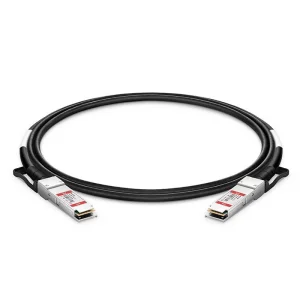
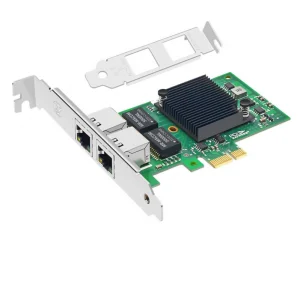
Select options to expand system bandwidth, add local NVMe storage arrays, and connect edge devices to networks.