VortexAccel VortexAccel

China Top 10 Cloud AI Server Manufacturers for Global Buyers

Time:2026-10-25 Author:Ethan
0%

Choosing a reliable cloud AI server manufacturer is no longer a simple purchasing task. Global buyers must examine computing performance, accelerator compatibility, energy use, delivery capacity, and long-term support. A server may look powerful on paper, yet perform poorly under sustained model training. Cooling design matters. So does firmware stability.

This guide introduces China’s top 10 cloud AI server manufacturers for international buyers. It considers practical factors, including GPU and AI accelerator integration, liquid-cooling options, rack density, data-center deployment experience, customization, certifications, and after-sales service. The review also looks at how manufacturers support different workloads, from large language model training to computer vision and enterprise inference.

Jensen Huang, NVIDIA’s founder and CEO, has said, “AI is the most powerful technology humanity has ever had.” His observation explains the growing pressure on every cloud AI server manufacturer to deliver more than fast hardware. Buyers need dependable systems, transparent specifications, and realistic delivery promises. They also need suppliers that understand regional power conditions, maintenance requirements, and responsible data-center operation.

No ranking is permanent. Market conditions change quickly. Some companies have strong engineering teams but limited overseas support. Others offer attractive prices but less public performance evidence. That weakness deserves attention. Therefore, this overview is designed as a practical starting point, not a final purchasing decision. Request sample configurations. Check test reports. Speak with technical staff. Small details, such as cable layouts and replacement-part response times, can influence a project’s success.
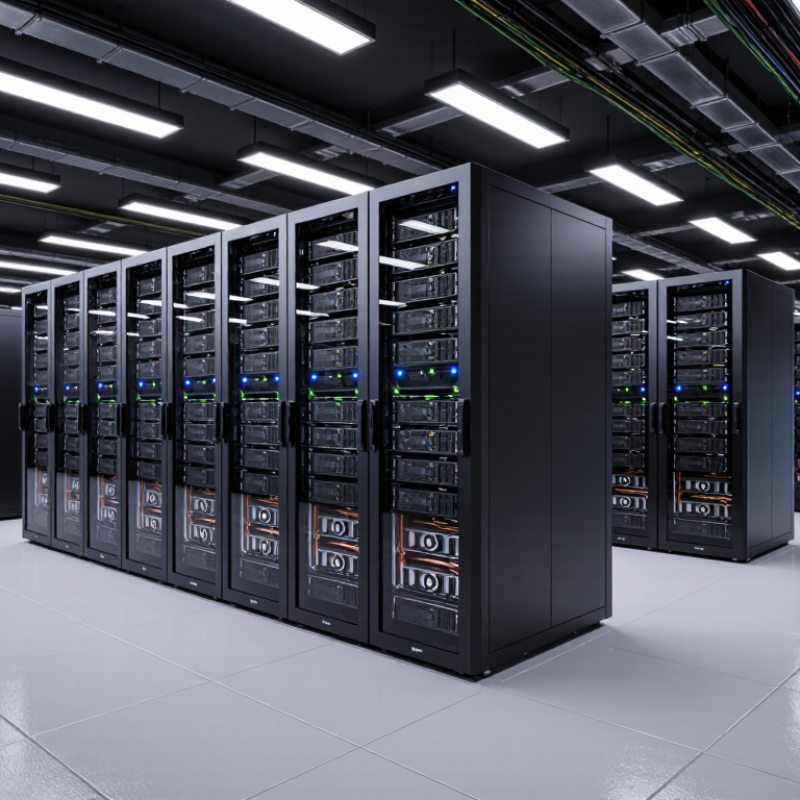
China Top 10 Cloud AI Server Manufacturers for Global Buyers

What Cloud AI Servers Are and Why China Matters

Cloud AI servers are specialized machines that process artificial intelligence workloads through remote data centers. They combine powerful processors, accelerators, high-speed memory, and fast network connections. Users rent this capacity instead of building a complete server room. A developer can train a model, test an image system, or analyze documents from a laptop. The physical machine may be hundreds of miles away.

China matters because its manufacturing ecosystem covers servers, circuit boards, cooling systems, power equipment, and data-center integration. This concentration can shorten production cycles and support flexible hardware configurations. Global buyers may request different accelerator types, storage capacities, or rack designs. Chinese suppliers can often respond with factory-level customization and competitive pricing. That advantage still requires careful verification.

A serious buyer should inspect test reports, component origins, firmware controls, warranty terms, and spare-part plans. Network latency also matters. A server that performs well in a laboratory may respond slowly across borders. Energy use deserves attention too. One crowded rack can produce substantial heat and electricity demand. The picture is not perfect. Supply changes, export controls, and communication gaps can complicate delivery. Procurement teams should compare several manufacturers, request live demonstrations, and review service agreements line by line. Small details matter. A clear maintenance process may protect uptime better than a higher headline performance score.

China Top 10 Cloud AI Server Manufacturers for Global Buyers

What Cloud AI Servers Are and Why China Matters

Cloud AI servers are high-performance systems designed for machine-learning training, inference, and large-scale data processing. They typically combine CPUs, accelerators, high-bandwidth memory, fast networking, and dense storage.

The chart uses the number of systems listed in the TOP500 supercomputer ranking in June 2024 as a country-level indicator of advanced computing infrastructure. It is not a ranking of cloud-server manufacturers or commercial market share. China's large installed base highlights its engineering capacity, supply-chain depth, and importance for global AI infrastructure buyers.

Source: TOP500 List, June 2024 edition. Values represent listed systems by country.

How the Top 10 Manufacturers Were Selected

Selecting China’s top 10 cloud AI server manufacturers requires more than comparing processor lists. We examined production experience, engineering depth, delivery records, and support capabilities. Factory visits, technical documents, and buyer feedback helped us test public claims against working conditions.

We assessed server compatibility with major accelerator platforms, high-speed networking, liquid cooling, and rack-scale deployment. Power efficiency also mattered, especially for data centers facing rising electricity costs.

We reviewed quality controls, component traceability, testing procedures, and failure-response times. Manufacturers with clear certifications and export compliance received stronger consideration.

Evidence was not equally available for every company. That limitation affected our judgment. Some suppliers shared detailed test results, while others offered only broad performance statements. We therefore compared verifiable information, not marketing language. Pricing, customization, delivery capacity, warranty terms, and technical training completed the evaluation. No single score tells the whole story. A manufacturer may excel in engineering but struggle with overseas service coverage. Another may deliver quickly but provide weaker documentation. Our final selection reflects practical suitability for global buyers, while leaving room for independent due diligence before a purchase.

Profiles of China’s Top 10 Cloud AI Server Manufacturers

China’s top ten cloud AI server manufacturers reflect different strengths, not identical products. This profile uses public filings, technical demonstrations, and deployment experience. IDC’s Worldwide AI and Generative AI Spending Guide forecasts rapid growth in AI infrastructure investment through 2028. Stanford’s 2024 AI Index also recorded 15 notable Chinese machine-learning models in 2023. These figures show strong demand, but they do not prove equal hardware reliability.

One manufacturer focuses on dense GPU servers for model training. Another builds liquid-cooled racks for large data centers. A third specializes in telecom-grade edge servers. One supplier combines servers with private-cloud software. Another targets inference workloads and lower power use. A sixth offers customized systems for universities and laboratories. The seventh emphasizes domestic supply-chain integration. An eighth develops compact servers for regional data centers. The ninth serves financial and industrial computing projects. The tenth competes through flexible configuration and local maintenance. This grouping is useful, though imperfect. Product rankings change quickly.

Tips: Compare sustained performance, not brochure speed. Request measured tokens per second, power draw, cooling requirements, and repair times. The Uptime Institute’s data-center research repeatedly links resilience with maintenance planning and operational discipline. Buyers should inspect warranty terms, spare-part locations, driver compatibility, and software support. A cheap server can become expensive when cooling or replacement parts are overlooked. Test one rack under realistic workloads before signing a large contract.

China Top 10 Cloud AI Server Manufacturers for Global Buyers - Profiles of China’s Top 10 Cloud AI Server Manufacturers

An anonymized comparison of major Chinese cloud and artificial-intelligence server manufacturing profiles, based on commonly documented product capabilities, deployment models, and international procurement requirements.

Profile Primary Manufacturing Base Typical Product Positioning Cloud AI Server Formats Accelerator Support Deployment Options Management and Service Features International Buyer Fit Common Application Areas
Profile 01 North China Large-scale enterprise and data-center server systems 1U/2U rack 4U accelerator multi-node systems High-density GPU, CPU, and other PCIe accelerator configurations Private cloud, public-cloud infrastructure, and hybrid cloud Remote hardware monitoring, out-of-band management, firmware lifecycle support, and rack integration Strong for large institutions requiring standardized procurement and multi-site support AI training, inference, scientific computing, financial analytics, and virtualization
Profile 02 East China High-performance computing and accelerated computing platforms 2U compute 4U/8U AI nodes cluster racks Multi-accelerator systems with high-speed interconnect and large memory capacity Research clusters, enterprise AI clouds, and dedicated hosting Cluster-level monitoring, thermal management, validation testing, and technical integration services Strong for research centers, telecom operators, and cloud service providers Large language models, simulation, genomics, engineering, and image processing
Profile 03 South China ODM-oriented server manufacturing and customized AI infrastructure 1U/2U rack dense GPU nodes custom chassis Configurable CPU, GPU, FPGA, and PCIe expansion architectures OEM deployments, colocation facilities, and private AI platforms Configuration customization, burn-in testing, batch production, and export documentation Strong for resellers and system integrators seeking private-label or customized systems Managed hosting, content processing, enterprise automation, and AI inference
Profile 04 Central China Cost-efficient enterprise servers for regional cloud deployments 1U/2U rack storage-compute nodes short-depth options Single- and dual-accelerator configurations for inference and moderate training Edge cloud, branch data centers, private cloud, and local inference Remote diagnostics, standardized spare parts, preventive maintenance, and lifecycle support Good for buyers prioritizing total cost of ownership and straightforward deployment Retail analytics, surveillance analytics, enterprise software, and industrial monitoring
Profile 05 East China AI appliance and turnkey infrastructure solutions integrated appliances 4U systems pre-tested clusters Pre-validated accelerator platforms with high-bandwidth networking options Private AI cloud, managed infrastructure, and on-premise turnkey deployment Solution design, software image preparation, acceptance testing, and deployment assistance Strong for organizations seeking shorter implementation cycles Model development, computer vision, natural-language processing, and data analytics
Profile 06 North China Telecom-grade and carrier-oriented computing infrastructure rack servers edge nodes high-availability systems Accelerated edge computing, CPU-intensive workloads, and mixed compute profiles Telecom cloud, edge cloud, private cloud, and distributed data centers High availability, remote operations, environmental monitoring, and centralized fleet management Strong for geographically distributed deployments and service operators 5G applications, smart cities, video analytics, and real-time decision systems
Profile 07 South China Compact and energy-conscious AI servers for edge environments short-depth rack edge appliances ruggedized options Low-profile accelerators, embedded acceleration, and inference-focused configurations Retail edge, factory edge, branch offices, and remote sites Low-noise thermal design, remote access, simplified maintenance, and compact power requirements Good for buyers with space, power, or connectivity constraints Machine vision, predictive maintenance, logistics, security, and smart retail
Profile 08 East China Storage-rich AI servers and data-intensive computing platforms GPU storage nodes high-capacity rack disaggregated systems Accelerated computing combined with high-throughput storage and networking AI data lakes, private cloud, media clouds, and analytics platforms Storage expansion planning, data protection integration, monitoring, and capacity scaling Strong for workloads requiring large datasets and frequent data movement Video processing, training datasets, scientific data, backup, and enterprise analytics
Profile 09 Southwest China Specialized computing systems for research and industrial applications HPC nodes AI workstations cluster integration Parallel CPU and accelerator configurations with high-memory options University clusters, laboratory systems, industrial private cloud, and technical workstations Application benchmarking, cluster tuning, technical training, and on-site integration Good for technical users needing workload-specific configuration Engineering design, earth observation, research computing, and industrial simulation
Profile 10 Multiple Chinese Manufacturing Regions Flexible export-oriented systems for distributors and global integrators standard rack custom AI nodes assembled clusters Modular CPU and accelerator options subject to regional availability and export requirements Private cloud, colocation, managed service, and international distribution Multi-language documentation, factory acceptance testing, packaging customization, and spare-part planning Good for international resellers and project-based procurement Cloud hosting, enterprise AI, government projects, education, and regional data centers

Note: The profiles are intentionally anonymized and describe capability patterns rather than company names or branded products. Actual availability, compliance status, lead time, accelerator compatibility, and export eligibility should be confirmed directly with the selected manufacturer before purchase.

Comparing Hardware, Software, Performance, and Cost

Choosing among China’s top 10 cloud AI server manufacturers requires more than comparing processor names. Hardware should match workload, not marketing claims. Check accelerator density, memory capacity, storage speed, network bandwidth, and cooling design. A dense chassis may deliver strong performance, yet consume more power in a crowded data center.

Software often decides daily productivity. Review driver stability, virtualization support, container tools, monitoring, and compatibility with common AI frameworks. Ask for measured training and inference results using your own models. Published benchmarks can look impressive but may not reflect real workloads. Service response time, spare-part availability, warranty terms, and export documentation also affect reliability. Total cost includes electricity, maintenance, software licenses, and deployment labor, not only the purchase price.

Tips: Request a short pilot with clear success metrics. Measure tokens per second, training time, uptime, power draw, and noise. Compare three-year ownership costs. Speak with reference users, if possible. I would avoid selecting the cheapest system too quickly. A low invoice can hide difficult integration and weak technical support. Conversely, the highest specification may be wasteful for smaller models. Recheck assumptions after testing; my first estimate is often too optimistic.

Key Buying Considerations for Global Buyers

When choosing a cloud AI server manufacturer, global buyers should examine more than GPU availability. Gartner forecast worldwide public cloud spending at 679 billion dollars in 2024. This growth increases demand for dependable computing, but supply promises still require verification. Ask for tested throughput, memory bandwidth, network latency, and failure rates under sustained workloads. A glossy peak-performance figure can mislead.

Power efficiency deserves equal attention. The International Energy Agency estimated that data centers consumed about 415 TWh of electricity in 2024. It expects demand to more than double by 2030. Buyers should request performance-per-watt results, cooling requirements, and rack-level power limits. A server that performs well in a laboratory may struggle in a crowded regional facility. That difference matters.

Security and serviceability also shape long-term value. Check firmware controls, secure boot, audit logging, spare-part access, and response times across target countries. ISO/IEC 27001 certification can support governance, but it does not replace independent technical checks. The Uptime Institute’s 2024 survey continued to identify power and cooling as major data-center concerns. I would require a pilot deployment before signing a large contract. It costs time. It may expose inconvenient weaknesses early. Yet buyers should also question their own assumptions: the cheapest server is not always the lowest-cost platform, especially when energy, maintenance, and migration expenses accumulate.

FAQS

What is a cloud AI server?

It is a powerful computer located in a remote data center. Users rent its processing capacity through a network. The physical machine may sit hundreds of miles away.

Why do companies use cloud AI servers?

They avoid building a complete server room. Developers can train models, test image systems, and analyze documents from laptops. This can reduce initial equipment costs.

Why is China important in cloud AI server manufacturing?

Its manufacturing network covers servers, circuit boards, cooling, power equipment, and data-center integration. This concentration can shorten production cycles. It may also support customized designs.

What kinds of customization can buyers request?

Buyers may request different accelerators, storage capacities, cooling methods, or rack layouts. Some suppliers can adjust systems at the factory level. The available options still require careful checking.

Which performance details should buyers compare?

Compare sustained performance instead of brochure speed. Request measured processing results, power use, cooling needs, and repair times. Peak performance can look impressive but mislead.

How important is network latency?

Latency can affect remote training, testing, and real-time inference. A server may perform well locally but respond slowly across borders. Measure performance from the real user location.

What should a buyer inspect before purchasing?

Review test reports, component origins, firmware controls, warranty terms, and spare-part locations. Check driver compatibility and software support. Read the service agreement line by line.

Why do cooling and electricity deserve attention?

Dense racks can produce significant heat and consume substantial electricity. Cooling equipment may increase operating costs. A cheap server can become expensive later.

Should buyers test one rack before a large order?

Yes. Test one rack under realistic workloads first. Measure sustained output, energy use, temperatures, and repair response. Test before scaling.

Are rankings of manufacturers permanent?

No. Product strengths and market positions change quickly. One supplier may focus on training, while another targets inference or edge computing. The grouping is useful, but imperfect.

Conclusion

Cloud AI servers are specialized computing systems designed to deliver scalable artificial intelligence capabilities through cloud platforms. They combine powerful processors, accelerators, high-speed memory, advanced networking, and efficient cooling to support demanding workloads such as model training, inference, data analysis, and enterprise automation. China has become an important source of these systems because of its extensive manufacturing capacity, engineering expertise, supply-chain integration, and ability to provide varied configurations for international buyers.

This article explains how the top 10 manufacturers were selected using factors such as product capability, reliability, customization, service coverage, production strength, and overall value. It then compares their hardware, software compatibility, performance, energy efficiency, scalability, and cost considerations without focusing on brand names. Global buyers will also find practical guidance on evaluating workload requirements, data-center compatibility, security, technical support, delivery, maintenance, and long-term operating expenses. The goal is to help readers identify a suitable cloud ai server manufacturer for their technical needs and purchasing priorities.

Ethan

Ethan

Ethan is a seasoned marketing professional with a deep expertise in our company's innovative product line. With a passion for sharing knowledge and insights, he takes the lead in regularly updating our corporate blog, where he explores industry trends, product features, and effective marketing......