VortexAccel VortexAccel

Who Are the Leading AI Server Companies in 2026?

Time:2026-09-24 Author:Liam
0%

Who will define the AI server market in 2026? The answer may depend on more than accelerator speed. Leading ai server companies will be judged by complete systems, including GPUs, networking, cooling, software, and service support. A fast chip is only one part of a working data center. Operators also measure rack density, power use, deployment time, and uptime. In a modern facility, one server rack can draw enough electricity to reshape cooling plans. That physical reality matters.

This overview examines major technology vendors and server builders shaping the next wave of AI infrastructure. It considers companies such as NVIDIA, AMD, Dell Technologies, Hewlett Packard Enterprise, Lenovo, Supermicro, and large cloud providers with custom systems. Their positions are not identical. Some design accelerators. Others integrate racks, sell managed capacity, or build specialized platforms. Public product launches, customer deployments, financial disclosures, and independent benchmarks offer useful evidence. Marketing claims alone are not enough. They can age quickly.

The analysis also leaves room for uncertainty. 2026 has not arrived, and supply chains, energy prices, export rules, and new architectures could change the competitive map. A company that looks dominant today may face weak software adoption tomorrow. That possibility deserves attention. Real-world results can differ from laboratory scores, especially when models run continuously under difficult workloads. Readers should treat this guide as a careful snapshot, not a permanent ranking.
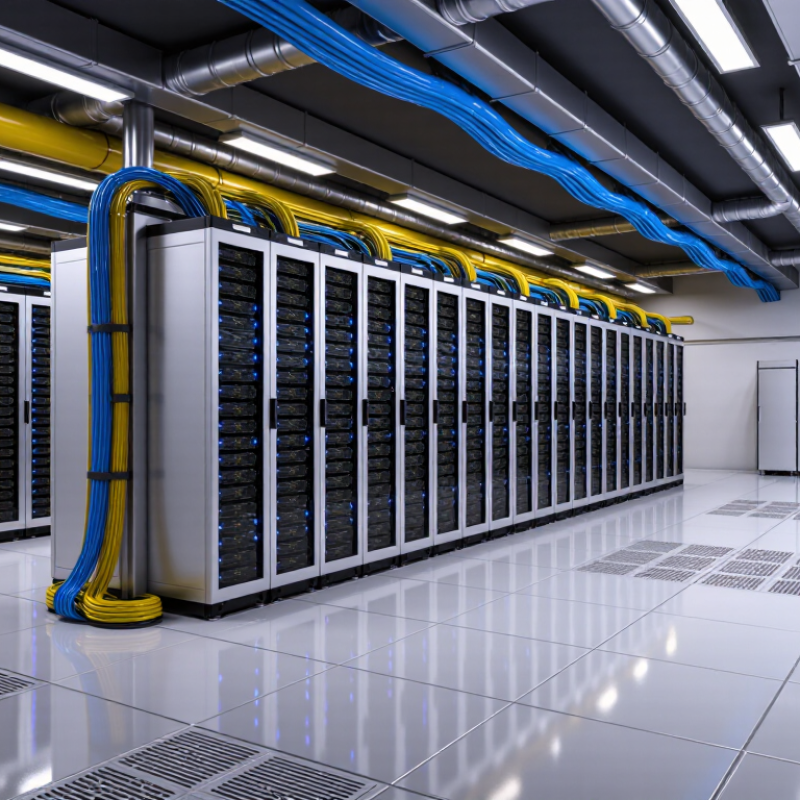
Who Are the Leading AI Server Companies in 2026?

Definition and Scope of the AI Server Industry in 2026

In 2026, an AI server is not simply a conventional computer with a powerful processor. It is a system designed to train or run artificial intelligence models, often using multiple accelerators, high-speed memory, and fast connections between components. A typical rack may contain dense server trays, cooling equipment, network switches, and power supplies built to handle sustained workloads. The details matter: a model that processes millions of images places different demands on a server than one that answers short text requests.

The AI server industry includes more than the companies assembling machines. Its scope extends to processor and accelerator design, memory, networking, storage, cooling, rack integration, and software that schedules computing tasks. It also includes deployment services, because a server must fit a facility’s power limits, floor plan, and cooling capacity. These pieces are interdependent. A strong accelerator can sit idle if data moves too slowly or cooling forces the system to reduce performance. That is easy to overlook.

For buyers and analysts, defining the industry by hardware alone can therefore be misleading. The useful unit of comparison may be a complete, operational system, not a single component. Yet boundaries remain imperfect: some suppliers serve general-purpose computing as well as AI, and product categories shift quickly. In 2026, credible comparisons should identify what is included, describe the intended workload, and distinguish measured performance from vendor claims.

Key Criteria for Comparing Leading AI Server Companies

Leading AI server companies in 2026 should be compared through measurable criteria, not marketing claims. The strongest evaluation starts with workload fit. Training systems need fast accelerators, high memory bandwidth, and low-latency networking. Inference systems may value power efficiency, compact design, and predictable response times. MLCommons’ MLPerf benchmarks provide useful performance evidence across training and inference workloads, although benchmark results rarely match every production environment.

Cost must include more than the purchase price. Analysts should calculate performance per dollar, electricity use, cooling demand, maintenance, and software integration. The International Energy Agency’s Electricity 2024 report projects data-center electricity consumption could exceed 1,000 terawatt-hours by 2026. That makes energy efficiency a purchasing requirement, not a secondary feature. A server producing impressive benchmark numbers may still be expensive to operate. No scorecard is perfect.

Reliability also deserves close inspection. Uptime Institute’s Global Data Center Survey 2024 continues to identify power problems as a major source of service disruption. Buyers should examine redundant power paths, thermal protection, firmware controls, repair timelines, and component availability. Security matters too, including secure boot, update policies, isolation features, and supply-chain transparency. IDC forecasts rapid growth in AI infrastructure spending through 2028, but spending alone does not prove quality. Real customer workloads, independent testing, warranty terms, and long-term support reveal more. Some comparisons remain incomplete because vendors disclose different measurements. That is a weakness worth admitting.

Major AI Server Companies and Their Market Positions

In 2026, leading AI server companies are best understood by their market roles, not by a single ranking. Large infrastructure manufacturers compete for enterprise and cloud contracts, where buyers need dependable systems, service coverage, and predictable delivery. Their strength is scale: they can configure racks, cooling, networking, and accelerators as one package.

A full rack matters.

Behind them, contract manufacturers and design specialists help cloud providers build systems at enormous volume. They may be less visible to end users, yet their production capacity can shape availability and pricing. Smaller integrators serve research labs and regional data centers, often tailoring servers to existing power and cooling limits.

A narrower niche.

Market position also depends on how well a company handles heat, power use, and component shortages—not just raw computing speed. A server drawing several kilowatts needs careful airflow or liquid cooling, and facility upgrades can delay deployment. Buyers should compare support terms, repair times, and workload performance under sustained use.

Spec sheets can mislead.

The picture is imperfect. Supply arrangements change, and public shipment estimates do not always reveal who built each system. In practice, the strongest position may belong to a company that delivers a workable rack on schedule, rather than one with the boldest performance claim.

Core Technologies, Products, and Customer Segments

Leading AI server companies in 2026 compete through tightly integrated hardware and software. Their core systems combine advanced graphics processors, custom AI accelerators, high-speed memory, and low-latency networking. Rack-scale designs now connect hundreds of chips with optical links or specialized switching fabrics. This reduces communication delays during large model training. Liquid cooling is also becoming practical for dense installations, especially where air cooling reaches its limits.

Their product portfolios usually cover three layers. Training servers handle massive datasets and require expandable memory, fast storage, and reliable cluster management. Inference appliances focus on response speed, energy efficiency, and predictable operating costs. Smaller edge systems support factories, hospitals, and retail locations with limited network access. The strongest suppliers also provide compilers, monitoring tools, model libraries, and technical support. Hardware alone is rarely enough.

Customer needs differ sharply. Cloud operators value fleet management, utilization rates, and rapid deployment. Financial institutions often prioritize data control, auditability, and stable inference performance. Research laboratories need flexible clusters for experimental workloads, while manufacturers may prefer rugged edge servers. In practice, published benchmarks can mislead. Results change with model size, software versions, cooling design, and workload patterns. Procurement teams should test representative models before signing long contracts. No ranking is permanent. Some newer suppliers may outperform established competitors in one narrow workload, yet struggle with support, supply consistency, or software maturity.

Who Are the Leading AI Server Companies in 2026?

Representative AI-server configurations by customer segment. The chart uses typical accelerator counts per server node rather than company or brand data.

Cloud training platforms generally use the densest multi-accelerator nodes, while research, enterprise inference, and fine-tuning deployments favor smaller configurations for cost, power, and operational flexibility.

Industry Trends Shaping AI Server Competition in 2026

In 2026, AI server competition is increasingly shaped by power, cooling, and deployment speed. A fast processor matters, but it cannot compensate for a data center that lacks sufficient electricity. Operators now compare systems by usable computing capacity per rack, not only by peak performance. Power is the constraint. Higher-density racks can reduce floor-space pressure, yet they also demand careful electrical planning and heat management.

Liquid cooling is moving from specialist deployments toward broader adoption, especially where dense accelerators generate concentrated heat. That shift changes maintenance routines: technicians need accessible connections, clear leak-detection procedures, and service plans that minimize downtime.

Cooling is no longer optional. Meanwhile, buyers are looking for modular designs that can be installed in phases as power and budgets become available. Supply-chain flexibility also matters; relying on a narrow set of components can make delivery schedules fragile.

These trends favor companies able to coordinate hardware, cooling, integration, and support. Still, no design solves every site’s limits. A small but important oversight remains: efficiency figures can look impressive in a test, then disappoint under real workloads. Careful buyers should examine sustained performance, energy use, and serviceability in conditions close to their own facilities.

FAQS

What is an AI server in 2026?

It is a system built to train or run artificial intelligence models. It may combine several accelerators, fast memory, and high-speed connections. A typical rack includes servers, switches, power supplies, and cooling equipment. Not just a powerful computer.

What does the AI server industry include?

The industry covers accelerators, processors, memory, networking, storage, cooling, and rack integration. It also includes software for scheduling computing tasks. Deployment services matter because each facility has different power and cooling limits. Hardware alone gives an incomplete picture.

Why can a powerful accelerator perform poorly?

Data may move too slowly between memory, storage, and processors. Heat can also force the system to reduce performance. For example, a dense rack may need liquid cooling to maintain stable operation. The fastest component can still sit idle.

How should buyers compare AI server systems?

Buyers should examine complete, operational systems rather than single components. They should define the workload, such as image processing or short text requests. Measured performance is more useful than an untested performance claim. Spec sheets can mislead.

What factors shape a supplier’s market position?

Delivery reliability, service coverage, repair times, and system integration strongly influence market position. Production capacity can affect availability and pricing. A smaller integrator may better fit a regional facility’s floor plan. Scale is not everything.

Why are power and cooling major industry concerns?

AI servers can consume several kilowatts in a single rack. The facility needs suitable electricity, airflow, and heat removal. Higher-density racks save floor space but increase planning difficulty. Power is the constraint.

Is liquid cooling becoming more common?

Yes, especially in installations with dense accelerators and concentrated heat. Technicians need accessible connections and clear leak-detection procedures. Maintenance plans should limit downtime during servicing. Cooling is no longer optional.

What should buyers check before deployment?

They should review sustained performance, energy use, serviceability, and delivery schedules. The system must fit the site’s power, cooling, and floor-space limits. Modular designs may support phased installation as budgets become available. One oversight can delay everything.

Why do test results sometimes disappoint in real facilities?

Laboratory tests may use ideal workloads and favorable cooling conditions. Actual systems face data movement limits, heat buildup, and maintenance interruptions. Performance should be tested with conditions resembling the buyer’s facility. Results are never perfect.

Conclusion

This article examines the definition and scope of the AI server industry in 2026, focusing on the hardware, software, networking, and support services that enable large-scale artificial intelligence workloads. It explains how leading ai server companies can be compared through criteria such as computing performance, energy efficiency, scalability, memory capacity, system reliability, security, supply-chain resilience, and customer support.

The discussion then evaluates major participants by their market positions, core technologies, product strategies, and target customer segments, including cloud providers, research institutions, public organizations, and enterprise users. It also explores the competitive trends shaping the sector, such as growing demand for specialized processors, accelerated computing, liquid cooling, modular data-center designs, efficient infrastructure, and flexible deployment models. Overall, the article presents a balanced framework for understanding how AI server companies compete and how technological and market changes may influence the industry throughout 2026.

Liam

Liam

Liam is a dedicated marketing professional with a profound expertise in the industry, where he excels at highlighting the unique advantages of our core products. With a keen understanding of market trends and consumer needs, Liam frequently updates our company’s professional blog, providing......