 VortexAccel
VortexAccel
VortexAccel
China’s AI server sector is moving from component assembly toward complete rack-scale infrastructure. An ai server manufacturing company now needs more than fast delivery. It must integrate GPUs, high-speed networking, storage, power systems, and advanced cooling. Liquid-cooling capability is becoming increasingly important as accelerator racks grow hotter and denser.
Industry data explains the urgency. TrendForce projected global AI server shipments would rise by about 28% in 2024. IDC’s Worldwide AI and Generative AI Spending Guide also identifies infrastructure as a major investment category through 2028. China’s market is supported by cloud providers, research institutions, financial services, and industrial users. However, shipment figures do not tell the whole story. Reliability, software compatibility, energy efficiency, and long-term maintenance can decide whether a supplier earns repeat orders.
Charles Liang, founder and chief executive of Supermicro, has repeatedly emphasized the importance of rapid system innovation. His widely reported statement captures the pressure clearly: “AI is the most important workload for the next decade.” That view is useful, but rankings still require caution. Public company disclosures vary, while private manufacturers may reveal limited revenue or production data. Therefore, this China Top 10 list considers manufacturing scale, AI integration, cooling expertise, delivery capacity, customer reach, and technical credibility. Some companies may lead in volume; others may excel in customized systems. The distinction matters. A polished specification sheet cannot replace stable operation inside a crowded data center, beside humming fans, dense cables, and rising electricity costs. The market is expanding quickly, but its winners are not yet permanently decided.
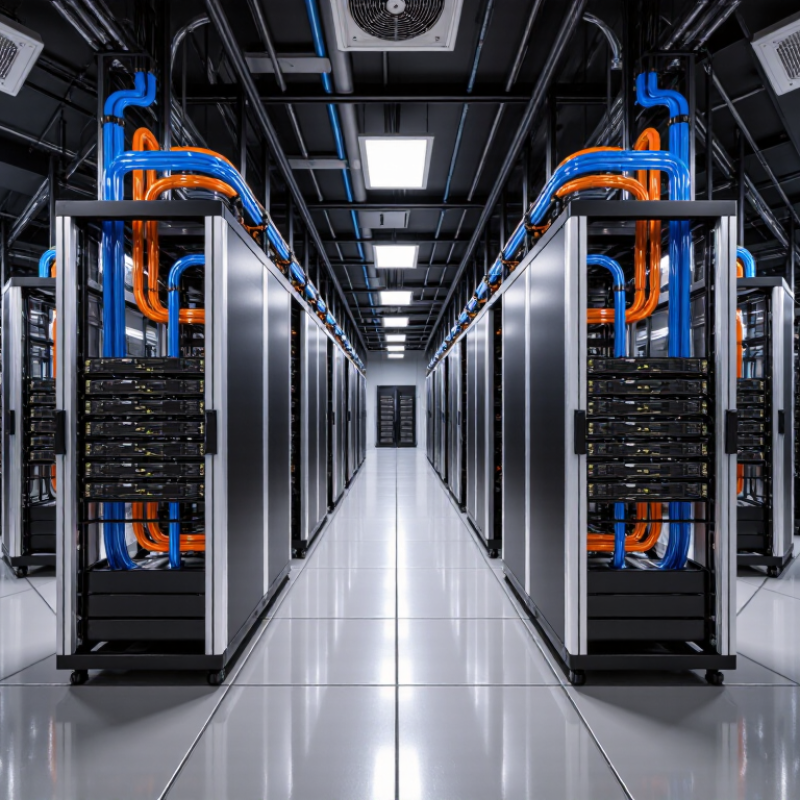
What defines an AI server manufacturing company in China? It is not simply assembling racks and installing accelerators. A capable manufacturer designs complete systems for model training, inference, storage, and high-speed networking. Its engineers must manage thermal density, power delivery, firmware, and supply continuity. IDC’s 2024 research on China’s AI infrastructure market highlights rapidly increasing demand for computing capacity across public services, finance, manufacturing, and research. Capacity alone is not enough.
Proof matters. A reliable manufacturer should provide repeatable benchmark results, documented failure rates, traceable components, and local service response times. TrendForce estimated global AI server shipments would reach 1.67 million units in 2024, rising about 41% year on year. That growth increases pressure on quality control. One unstable power module can interrupt expensive training jobs. Small faults become costly.
Energy performance also defines competence. The International Energy Agency reported that data centers consumed about 460 terawatt-hours globally in 2022, with demand potentially exceeding 1,000 terawatt-hours by 2026. Chinese manufacturers therefore need efficient cooling, intelligent workload scheduling, and measurable performance per watt. Yet many supplier claims remain difficult to compare. This is a weakness worth admitting. Buyers should request independent testing, transparent warranty terms, and evidence from comparable deployments, not polished product language. Reliability is built in the factory, then tested in the server room.
| Rank | Anonymous Manufacturer Profile | Primary Production Footprint | Core AI Server Capability | Typical System Form Factors | High-Density Cooling Readiness | Manufacturing & Quality Indicators | Deployment and Service Coverage |
|---|---|---|---|---|---|---|---|
| 1 | Profile A Enterprise-scale |
Yangtze River Delta and South China facilities | Integrated rack-scale systems for model training, inference, and high-performance computing | 1U, 2U, 4U, 8U, and full-rack solutions | Direct-to-chip liquid cooling, rear-door heat exchangers, and air-cooled configurations | Automated production lines, burn-in testing, traceable components, and internationally recognized quality-management processes | Domestic project delivery with established overseas logistics and technical-support capability |
| 2 | Profile B Rack integration |
Shenzhen, Dongguan, and nearby electronics manufacturing clusters | Multi-accelerator server platforms with high-speed networking and storage expansion | 2U and 4U accelerator servers; 19-inch rack systems | Air cooling for mainstream systems and optional liquid-cooling loops for dense deployments | Flexible build-to-order production, system-level validation, and supplier quality-control procedures | Strong channel coverage in China and contract-manufacturing support for international customers |
| 3 | Profile C Cloud infrastructure |
Beijing, Shanghai, and western data-center supply hubs | Large-scale AI clusters designed for cloud computing, distributed training, and inference services | 4U and 8U nodes, clustered racks, and customized data-center enclosures | Liquid-cooling distribution units, cold-plate compatibility, and optimized airflow engineering | Cluster testing, firmware validation, remote monitoring, and documented change-control processes | Nationwide deployment teams with experience supporting large data-center projects |
| 4 | Profile D ODM engineering |
Suzhou, Kunshan, and the broader Yangtze River Delta | Customized AI server designs based on customer-selected processors, accelerators, storage, and network cards | 1U to 8U systems and specialized short-depth or ruggedized chassis | Thermal simulation, high-static-pressure fans, and optional direct-liquid-cooling design | Rapid engineering changes, prototype-to-volume production, factory acceptance testing, and compliance documentation | Private-label and original-design manufacturing support for regional and overseas system integrators |
| 5 | Profile E HPC specialist |
Wuhan, Xi’an, and other research-oriented technology centers | Accelerated computing servers for scientific simulation, engineering analysis, and AI research | 2U, 4U, and dense multi-node chassis | High-airflow thermal architecture with liquid-cooling options for sustained computational loads | Performance benchmarking, component compatibility testing, and long-duration stress testing | University, laboratory, enterprise, and government-project integration capability |
| 6 | Profile F Edge AI |
Shenzhen, Chengdu, and coastal industrial parks | Compact inference servers for smart manufacturing, transportation, security, and telecommunications | 1U, 2U, short-depth, wall-mount, and edge-rack platforms | Energy-efficient air cooling, wide-temperature options, and selected liquid-cooling designs | Environmental testing, vibration testing, remote-management integration, and configurable chassis design | Regional deployment partners and field-replaceable service options |
| 7 | Profile G Telecom-grade |
Guangdong, Jiangsu, and northern communications-equipment hubs | AI infrastructure optimized for telecommunications, network functions, and distributed inference | 1U, 2U, 4U, and network-appliance-style platforms | High-efficiency fan systems, front-to-back airflow, and data-center liquid-cooling compatibility | Strict configuration management, reliability testing, remote administration, and long-life component planning | Strong domestic service network with telecom and industrial deployment experience |
| 8 | Profile H Storage-intensive |
Shanghai, Ningbo, and central China manufacturing locations | AI servers combining accelerator computing with high-capacity local storage and fast data pipelines | 2U and 4U storage servers, GPU nodes, and clustered storage-compute systems | Air-cooled mainstream configurations with optional cold-plate and rear-door cooling support | Disk, memory, network, and accelerator compatibility testing with data-integrity validation | Suitable for enterprise analytics, media processing, research, and private-cloud deployments |
| 9 | Profile I Custom systems |
Beijing, Tianjin, and eastern industrial zones | Project-specific AI servers for public-sector, finance, education, and industrial applications | Standard rack servers, workstation-class systems, and customized multi-node platforms | Air cooling as standard, with engineered liquid-cooling options for selected projects | Small-batch customization, acceptance testing, security configuration, and controlled product revisions | Strong domestic system-integration relationships and localized technical support |
| 10 | Profile J Emerging manufacturer |
Chengdu, Chongqing, and other western technology corridors | Cost-optimized AI inference and training systems for growing enterprise and regional data-center demand | 1U, 2U, and 4U rackmount systems | Optimized air cooling with readiness for higher-density liquid-cooling upgrades | Modular product design, standardized testing, flexible production volumes, and improving supply-chain maturity | Primarily domestic coverage with selected export and distributor-led projects |
It designs complete systems for training, inference, storage, and networking. A single rack is not enough. Engineers must control cooling, power delivery, firmware, and supply continuity.
Request repeatable benchmarks, failure-rate records, component traceability, and service response times. Ask for testing conditions. Polished claims can hide weak performance.
AI servers can consume substantial electricity during sustained workloads. Compare performance per watt, not only peak speed. Cooling and scheduling also affect operating costs.
Use identical workloads, software versions, and power limits. Compare performance, reliability, service, cost, and engineering flexibility. The comparison may still be imperfect.
Review accelerator compatibility, memory capacity, network bandwidth, rack density, and power consumption. Check whether the system fits your workload. A fast server may be expensive to operate.
Ask for high-temperature rack tests and sustained workload results. Review air or liquid cooling designs, noise levels, and maintenance access. Small cooling problems become big problems.
Examine local response times, spare-part availability, warranty terms, and firmware updates. Ask for realistic support commitments. A delayed replacement can interrupt training jobs.
A pilot reveals issues that brochures rarely show. Test workload completion, cooling noise, firmware stability, and delivery of spare parts. I would not approve a large purchase too quickly.
No ranking is perfect. Market influence may not match practical value for your workload. Independent testing and customer references provide stronger evidence.
China’s AI server industry is developing rapidly as demand grows for high-performance computing in model training, cloud services, intelligent manufacturing, scientific research, finance, healthcare, and smart cities. An ai server manufacturing company is typically defined by its ability to design, assemble, optimize, and support servers equipped with advanced processors, accelerators, high-speed memory, efficient storage, and reliable networking systems. This overview explains how to evaluate leading manufacturers through technical capabilities, product quality, delivery capacity, energy efficiency, customization, service support, and long-term innovation.
It also introduces ten representative types of Chinese AI server manufacturers without focusing on individual brand names, highlighting their product strategies, computing architectures, software compatibility, and industry strengths. Key technologies include heterogeneous computing, liquid cooling, modular design, intelligent scheduling, and secure data management. The article further examines major application areas and competitive trends, including domestic supply-chain development, green computing, specialized solutions, and the growing need for scalable infrastructure that can support increasingly complex artificial intelligence workloads.
