VortexAccel VortexAccel

2026 Top Data Center AI Server Manufacturers?

Time:2026-11-01 Author:Sienna
0%

Choosing a data center AI server manufacturer in 2026 is not simply a matter of comparing processor counts. AI workloads can place sustained pressure on accelerators, memory, networking, and cooling. A server that performs well in a lab may behave differently across a full rack. Details matter.

This guide introduces major manufacturers and the practical differences buyers should examine. It considers accelerator support, configurable systems, high-speed interconnects, power demands, and service coverage. A dense rack can require carefully planned airflow or liquid cooling, while power delivery may limit how many servers a facility can deploy. These constraints are easy to overlook in a product brochure.

There is no single best choice for every data center. Dell Technologies, Hewlett Packard Enterprise, Lenovo, and Supermicro are among the established names often considered for enterprise and AI infrastructure. Their offerings change, so specifications, availability, and support commitments should be checked directly with each vendor. A credible comparison should distinguish verified product details from marketing claims and match them to the buyer’s actual workloads. It should also consider deployment timelines, upgrade paths, and the cost of operating systems at scale. Numbers can mislead. Even a careful shortlist may miss a site-specific issue, such as limited cooling capacity or a network bottleneck. That uncertainty deserves attention, not a confident ranking.
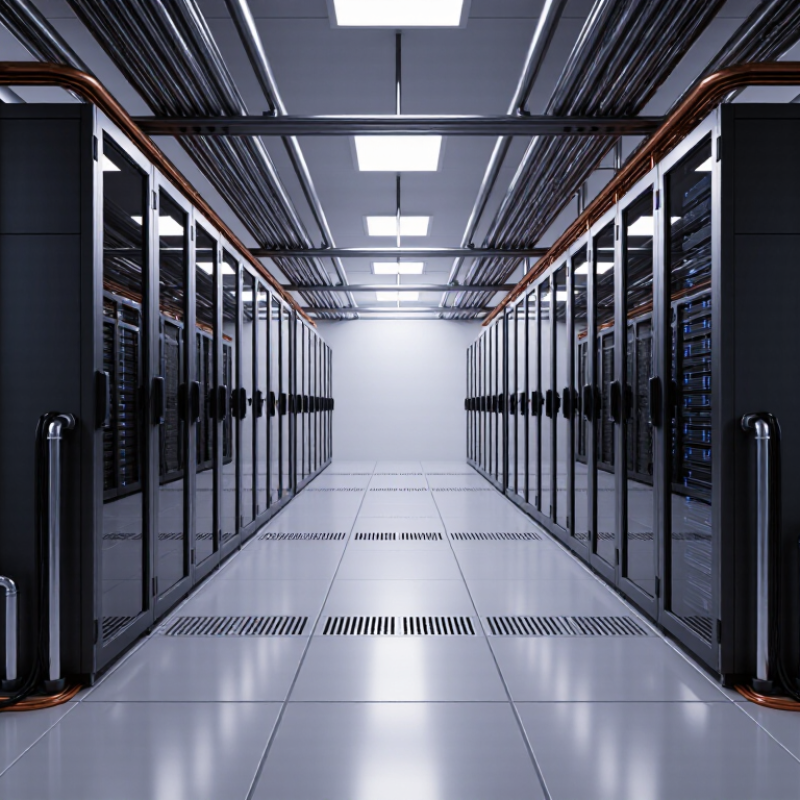
2026 Top Data Center AI Server Manufacturers?

What Defines a Data Center AI Server in 2026?

A data center AI server in 2026 is built to process demanding machine-learning workloads reliably, not just to post impressive peak speeds. Its design typically combines specialized accelerators, high-bandwidth memory, and fast links between processors. These components help large models move data without leaving computing capacity idle. That balance matters.

The server must also fit the realities of a data center. Operators assess power draw, heat output, cooling requirements, and how easily parts can be serviced. A dense system may save rack space, yet create greater cooling demands. Cables, airflow paths, and access for maintenance can affect performance as much as a headline specification.

Software support is another defining measure. Drivers, system monitoring, and compatibility with common AI frameworks influence how smoothly workloads run. Buyers should compare performance using relevant tasks, while checking memory capacity and sustained power use. A specification sheet can still mislead; short tests may not reveal thermal limits or prolonged workload behavior. The best choice depends on the model, budget, facility, and operating team. Some trade-offs remain difficult.

Key Criteria for Evaluating AI Server Manufacturers

Choosing an AI server manufacturer requires more than comparing accelerator counts. A credible evaluation starts with workload fit, thermal design, and measurable performance under sustained use. Ask for configuration details, including power draw, memory bandwidth, network capacity, and supported accelerator options. Then test representative jobs, not just short benchmark runs. Record throughput, latency, and energy use across several hours. Watch temperatures and fan behavior in a loaded rack. Measure the load. Published peak figures rarely describe everyday operating conditions.

Examine manufacturing quality and service capability as carefully as hardware specifications. Request clear warranty terms, repair timelines, spare-parts availability, and firmware support periods. Ask how the system handles component failures and whether diagnostic logs are accessible to your operations team. Check compatibility with your existing software, storage, and monitoring tools before committing. A small pilot can reveal awkward cable layouts or noisy cooling that a data sheet misses. No scorecard removes every uncertainty; even careful testing may not reflect future workloads. Document assumptions, compare like-for-like configurations, and treat vague answers as a reason to investigate further.

2026 Top Data Center AI Server Manufacturers? — Key Criteria for Evaluating AI Server Manufacturers

PCIe bandwidth is one useful, standards-based measure of a server’s I/O expansion capability. Compare supported generations against the bandwidth needs of accelerators, storage, and networking.

Values show theoretical bandwidth per lane in one direction, rounded to the nearest GB/s; actual application throughput may be lower due to protocol overhead and system configuration.

Leading Manufacturers and Their AI Server Platforms

Data center AI server manufacturers differ in how they balance accelerator density, memory capacity, and cooling. Their platforms may use air cooling, direct liquid cooling, or a mix of both. Each choice affects rack layout, power planning, and maintenance access.

A practical comparison starts with the workload, not a headline performance figure. Check how the server handles model training, inference, and data movement between accelerators. Ask for measured power use and thermal behavior under sustained load.

Small detail: cable paths matter. Crowded connections can complicate service and restrict airflow. That matters.

Platform software deserves equal attention. Review monitoring tools, firmware update procedures, and compatibility with existing storage and network systems. Ask how failures are isolated and how replacement parts are managed.

There are trade-offs.

A dense system may save floor space but demand stronger power and cooling infrastructure. Even experienced teams can misjudge facility readiness; a short pilot with real workloads may reveal gaps that a specification sheet misses.

How AI Server Designs Differ Across Manufacturers

AI server designs differ in how they balance compute density, cooling, and serviceability. Some systems place accelerators close together to reduce data-transfer delays. Others leave more room for airflow, cable access, or future upgrades. Those choices affect rack layout, power distribution, and maintenance time—not just benchmark scores.

The U.S. Department of Energy’s 2024 data center energy report estimated that U.S. data centers used 176 terawatt-hours in 2023, about 4.4% of national electricity. It projected 325–580 terawatt-hours by 2028. That pressure makes power efficiency a design decision. Compare performance per watt, cooling requirements, and usable compute under sustained workloads. A fast system can still be a poor fit if its facility cannot remove the heat.

Cooling is a visible dividing line. Direct liquid cooling can support dense accelerator configurations, while air-cooled designs may simplify deployment where cooling infrastructure is limited. The International Energy Agency’s Electricity 2024 report projected that data centers, AI, and cryptocurrency could together use over 1,000 terawatt-hours in 2026. The figure is not specific to AI servers, but it shows why thermal design matters. Check supported rack power, coolant connections, and component replacement procedures. Small details matter. I would also question headline efficiency claims unless the workload, ambient conditions, and measurement method are stated. That caveat is often missing.

2026 Top Data Center AI Server Manufacturers? - How AI Server Designs Differ Across Manufacturers

Representative AI server design patterns—not a company ranking. Configurations vary by system and are shown as common design choices rather than universal specifications.

Design Pattern Accelerator Configuration CPU and Memory Design Cooling Approach Scale-Up Interconnect Scale-Out Networking Typical Strengths and Trade-offs
Dense, multi-accelerator node Several high-power accelerators in one server; configurations commonly use PCIe cards or accelerator modules connected through a high-bandwidth fabric. One or more server CPUs provide host processing and I/O. Large system memory supports data staging and accelerator workloads. May use high-capacity air cooling or direct-to-chip liquid cooling, depending on power density and facility design. High-bandwidth links between accelerators reduce communication bottlenecks for distributed training within a node. High-speed Ethernet or InfiniBand-class fabrics connect nodes for distributed training and large-scale inference. High compute density and fast intra-node communication; requires careful power, cooling, and fabric planning.
Flexible PCIe accelerator server PCIe-based accelerators in a general-purpose rack server, with the number and type determined by chassis layout and power limits. Standard server CPU and memory architecture; PCIe lanes and slot placement influence accelerator count and peripheral support. Typically air-cooled in supported configurations; higher-power versions may require enhanced airflow or liquid-cooling options. Accelerators communicate over PCIe; peer-to-peer support and available link bandwidth depend on the platform design. Commonly uses Ethernet; higher-speed adapters can be selected for cluster or storage traffic. Adaptable to mixed workloads and easier to integrate into conventional server environments; may offer less accelerator-to-accelerator bandwidth than tightly coupled designs.
Liquid-cooled high-density rack system Multiple high-power accelerators are deployed in servers designed for high rack-level compute density. Host CPUs, system memory, and accelerator resources are balanced around workload requirements and rack power budgets. Direct-to-chip liquid cooling can remove heat from CPUs and accelerators; facility water loops and heat-rejection systems must be compatible. May use high-bandwidth accelerator links within each server; exact topology depends on the platform. High-speed cluster networking connects racks and nodes; port count and speed depend on the target scale and workload. Can support greater compute density and reduce reliance on room-air cooling; adds liquid-cooling infrastructure and maintenance requirements.
Inference-optimized server Accelerator count and memory capacity are selected for serving models at the desired throughput and latency; some deployments use fewer, more efficiently utilized accelerators. CPU, memory, and I/O are sized to feed inference workloads, handle requests, and support model-serving software. Air cooling is common at moderate power levels; cooling requirements increase with accelerator power and server density. Local accelerator links can help when a model is split across devices; single-device deployments may rely less on scale-up links. Network design prioritizes service availability, request throughput, and predictable latency. Can be tuned for cost per inference and response time; the best balance depends on model size, batching, and utilization.
Modular or disaggregated platform Compute, accelerator, storage, or networking resources may be organized as separate modules or composable system elements. Resource allocation can be matched to workload needs, but depends on compatible chassis, management, and interconnect standards. Cooling is determined by the combined module and rack design; high-density accelerator modules may require liquid cooling. Uses internal links or chassis-level fabrics to connect modules; bandwidth and latency depend on the implementation. Fabric design supports communication between pooled resources and conventional cluster networks. Offers potential flexibility in resource allocation and serviceability; adds integration and orchestration complexity.

Factors Shaping the Data Center AI Server Market in 2026

In 2026, data center AI server demand will depend on more than processor speed. Training and inference workloads need different balances of memory, networking, and compute. Power availability is becoming a practical limit: a rack packed with accelerators can require careful electrical planning and stronger cooling. In some facilities, liquid cooling may be necessary, but retrofit costs and staff readiness can slow adoption. Small details matter, such as whether a site can support heavier racks and maintain stable inlet temperatures.

Manufacturers will also be shaped by component supply, system integration, and long-term service capacity. Buyers should compare complete configurations, not headline performance figures. Check memory capacity, network bandwidth, power draw, cooling requirements, and the time needed to replace a failed component. Software compatibility and predictable maintenance can matter as much as peak benchmark results. Forecasts remain uncertain. A model that looks efficient in a lab may behave differently under real workloads, and this deserves more scrutiny than it often gets.

Tips: Ask for workload-specific test results and a clear power estimate per rack. Confirm cooling plans before ordering. Leave room for change; deployment assumptions are not always right.

FAQS

What should buyers compare beyond accelerator counts?

Compare workload fit, memory bandwidth, network capacity, power draw, and supported accelerator options. Counts alone can mislead.

How can teams test server performance realistically?

Run representative training or inference jobs for several hours. Record throughput, latency, energy use, temperatures, and fan behavior. Short tests miss things.

Why check cooling and rack readiness before ordering?

Dense systems can demand stronger power and cooling infrastructure. Confirm rack capacity, stable inlet temperatures, and maintenance access. Retrofits can be costly.

Which service details should buyers confirm?

Check warranty terms, repair timelines, spare-parts availability, and firmware support periods. Ask how failures are diagnosed. Get clear answers.

What can a small pilot reveal?

A pilot can expose awkward cable routes, restricted airflow, or noisy cooling. It can also test software and storage compatibility. We may still miss something.

How should teams compare complete server configurations?

Compare similar configurations under the same workload. Include memory, network bandwidth, power use, and cooling needs. Headline figures are incomplete.

What factors may shape AI server demand in 2026?

Training and inference need different balances of compute, memory, and networking. Power availability, component supply, and service capacity also matter.

How should buyers treat published performance figures?

Treat peak results as a starting point, not a promise. Lab conditions may differ from real workloads. Document assumptions, then revisit them.

Conclusion

In 2026, a data center AI server is more than a powerful machine: it is a system designed to train and run AI workloads efficiently at scale. Its performance depends on how processors, accelerators, memory, storage, networking, cooling, and software work together. Evaluating a data center ai server manufacturer therefore involves looking beyond peak computing figures to assess workload suitability, scalability, energy efficiency, reliability, security, support, and the ability to integrate with existing data center infrastructure.

Leading manufacturers distinguish their platforms through different choices in system architecture, accelerator density, networking, cooling, and management tools. These designs involve trade-offs: a configuration optimized for large-scale model training may differ from one built for inference or mixed workloads. Market decisions in 2026 are shaped by rising demand for AI capacity, power and cooling constraints, supply availability, operating costs, and the need for flexible deployments. The most suitable platform is the one that balances performance, efficiency, and long-term operational needs.

Sienna

Sienna

Sienna is a skilled marketing professional with a deep expertise in our company’s core products and services. With a passion for innovation and detail, she plays a pivotal role in crafting insightful blog posts that not only highlight the unique features of our offerings but also provide valuable......