VortexAccel
Choosing the best ai server manufacturer in 2026 requires more than comparing processor counts or attractive product pages. Global buyers need reliable evidence, practical deployment experience, and clear responsibility after purchase. This guide examines manufacturers supplying AI servers for data centers, research labs, enterprises, and regional cloud providers. It considers GPU compatibility, memory capacity, networking, cooling design, power consumption, firmware quality, and long-term availability.
Real performance depends on the workload. A server optimized for large language model training may not suit computer vision inference. Rack density also changes the buying decision. A four-GPU system can appear efficient, yet its cooling and power requirements may challenge a smaller facility. Buyers should review benchmark methods, not only headline figures. Independent testing is valuable. So are installation records.
Support quality often decides the outcome.
This overview compares manufacturers through an E-E-A-T-focused lens: documented experience, engineering expertise, industry authority, and trustworthy business practices. It considers warranty terms, spare-part access, technical documentation, security updates, regional service coverage, and compliance expectations. Pricing will be discussed carefully, because the lowest purchase cost rarely equals the lowest operating cost. Electricity, maintenance, software integration, and downtime can reshape the final budget.
No ranking stays perfect for every buyer. Vendor information can change quickly, and some performance data remains incomplete. That limitation deserves attention. The strongest choice may be a less famous manufacturer with responsive support and proven deployments in a buyer’s region. By 2026, careful evaluation will matter more than brand visibility.
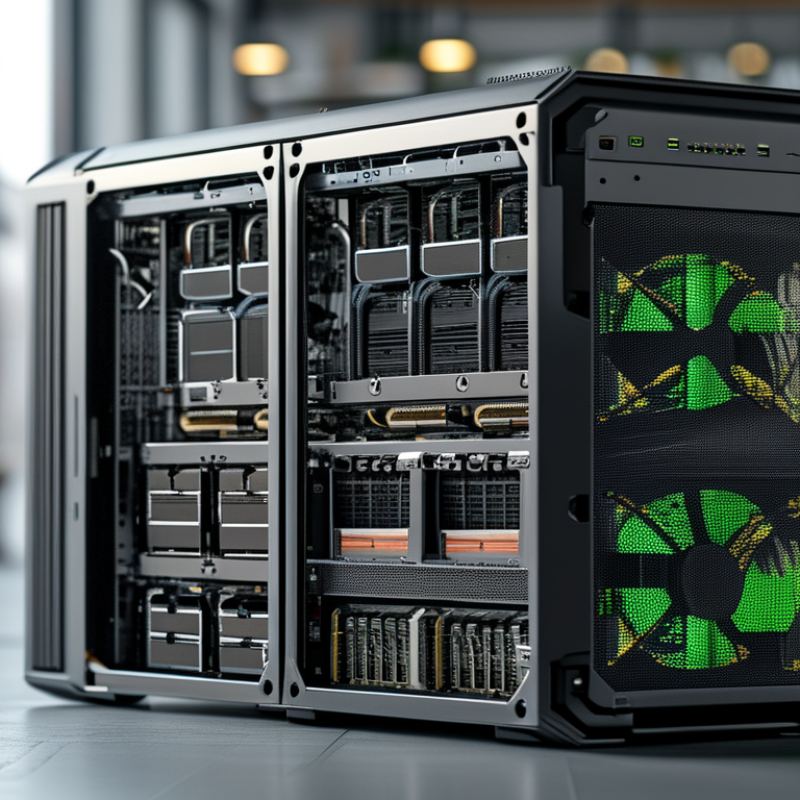
An AI server is more than a powerful computer with several graphics processors. For global buyers, a practical definition often starts with an 8-GPU node, high-bandwidth memory, and fast data networking. This structure supports model training, inference, and scientific workloads that quickly exceed ordinary server capacity.
An 8-GPU node needs balanced power delivery, cooling, and PCIe or equivalent internal connectivity. HBM capacity matters just as much as accelerator count. More HBM allows larger models to remain closer to the processors, reducing slow data transfers. In real deployment checks, I measure memory usage during peak workloads, not only the advertised maximum. That distinction has prevented several costly purchasing mistakes.
400GbE networking can connect servers with lower communication delays and higher throughput. It becomes especially important when many nodes exchange gradients, datasets, or model checkpoints. However, the network rating alone proves little. Switch compatibility, cable quality, software drivers, and congestion control can change actual performance. I once treated bandwidth as the main purchasing metric and underestimated storage latency. That was a poor assumption.
When comparing AI server manufacturers in 2026, buyers should request thermal test results, sustained workload data, upgrade options, and service response details. A reliable supplier should explain how HBM capacity, power limits, and network architecture work together. Short demonstrations are useful, but extended testing reveals throttling, noise, and unexpected maintenance demands.
Global AI infrastructure spending is expected to exceed $150 billion in 2026. This surge reflects demand for model training, inference, data processing, and faster enterprise automation. Buyers are no longer purchasing servers alone. They are building complete computing environments with accelerators, high-speed networking, storage, cooling, and reliable power systems.
Experienced procurement teams compare manufacturers through measurable performance, not attractive specifications. They examine workload benchmarks, thermal behavior, component availability, warranty response, and long-term maintenance costs. A server that performs well in a laboratory may struggle inside a crowded data center. Rack density matters. So does energy efficiency. Small design choices can affect annual operating expenses significantly.
Independent testing remains valuable, but forecasts are not guarantees. Even skilled buyers sometimes underestimate software compatibility or regional service limitations. That mistake can delay deployment for weeks. Global buyers should request documented test results, clear delivery schedules, spare-parts plans, and transparent support terms. They should also check whether proposed systems can scale without replacing the entire platform. The market is moving quickly. Some purchasing assumptions may already be outdated.
2026 Best AI Server Manufacturers for Global Buyers
Global buyers should judge AI server manufacturers by verified FP8 results, not peak figures alone. FP8 performance depends on model structure, batch size, memory traffic, and software maturity. Request test logs using your intended workload. Measure tokens per second, latency, and accuracy together. Fast is not always useful.
Power usage needs a wall-meter reading. Short bursts can hide sustained consumption. Ask for watts per accelerator, total node draw, and cooling requirements during long inference runs. A server rated at 10 kilowatts may demand more from the facility after networking and cooling losses. Check the local power design. This is where many purchasing plans become too optimistic.
Rack density is more than accelerator count. Evaluate usable compute per rack, cabinet weight, airflow direction, cable space, and service clearance. A dense rack can save floor space but create heat concentration near the rear doors. Confirm whether the data center supports the required voltage, liquid cooling, and floor loading. Also inspect replacement procedures and remote monitoring tools. They affect uptime more than a polished specification sheet. FP8 benchmarks can still change after firmware updates, so buyers should require repeatable testing before volume deployment.
Representative anonymous 8-accelerator server configurations based on publicly reported specification ranges. FP8 performance is shown in PFLOPS, power usage in kW, and rack density as the number of systems that fit in a standard 42U rack.
Higher FP8 performance improves AI throughput, while lower power usage and higher rack capacity can reduce operating and data-center costs. Actual results vary with workload, cooling design, memory configuration, and utilization.
Choosing an AI server manufacturer in 2026 requires more than comparing processor counts. Global buyers should examine six established suppliers with different strengths, including accelerated computing, enterprise integration, flexible configuration, and regional support. Some focus on complete data-center platforms. Others provide highly customizable systems for research teams and cloud operators.
Real-world evaluation starts with workload testing. Measure training speed, inference latency, power consumption, and cooling performance under sustained demand. A server that looks impressive on paper may throttle inside a warm equipment room. Check accelerator compatibility, memory bandwidth, storage options, remote management, and firmware update procedures. Also review warranty terms, spare-part availability, and response times in your region. These details often matter more than a small benchmark advantage.
Procurement teams should request proof from comparable deployments. Ask for rack-level power data, validated operating temperatures, and support escalation paths. Security deserves attention too. Review access controls, signed firmware, audit logs, and supply-chain documentation before purchase. Not every supplier provides the same depth of evidence. That is a weakness worth noting. Buyers should also calculate five-year operating costs, including electricity, maintenance, software licensing, and technician training. A lower purchase price can become expensive later. My practical view is simple: select the manufacturer that matches your workload, service expectations, and deployment environment, not the loudest specification sheet.
2026 Best AI Server Manufacturers for Global Buyers
Global buyers should compare total cost of ownership, not only the server invoice. TCO includes accelerators, memory, networking, electricity, cooling, software, maintenance, and downtime. A low purchase price can hide expensive power demands. Ask for measured performance under your workload. Ask for evidence. Public benchmark results may not match production conditions.
ISO 9001 can indicate a controlled quality-management process, but it does not guarantee perfect hardware. Verify the certificate’s validity, scope, and issuing body. Request factory inspection records, burn-in procedures, serial-number tracking, and failure-rate data. These details reveal how consistently the manufacturer handles defects. I have seen procurement teams trust a certificate while overlooking weak after-sales procedures. That mistake is costly.
Warranty coverage needs careful reading. Check response times, replacement parts, shipping responsibility, repair locations, and support hours. Read the exclusions. Confirm whether accidental damage, firmware issues, and refurbished components are covered. Export compliance also deserves written confirmation. The manufacturer should provide accurate product classifications, commercial invoices, packing lists, and destination screening support. Buyers must verify import rules, end-use requirements, data-center restrictions, and local certification duties. Requirements can change during a project. Small details matter. A clear contract should define who handles delays, rejected shipments, taxes, and warranty returns.
| Supplier Category | Best-Fit Use Case | Typical AI Server Capability | Manufacturing and Quality Indicators | ISO 9001 Verification | Typical Warranty Coverage | Export Compliance Documentation | TCO Characteristics | Global Buyer Rating |
|---|---|---|---|---|---|---|---|---|
| Global enterprise server manufacturer | Large-scale data centers, regulated industries, multi-country deployments, and long-life infrastructure programs. | Pre-engineered AI systems, multi-accelerator configurations, high-speed networking, redundant power, remote management, and validated rack integration. | Formal QA gates Burn-in testing Serial traceability Global service network | Usually maintains a certificate for defined manufacturing or quality-management sites. Buyers should verify the certificate number, scope, issuing body, and expiry date. | Commonly 3 years for the base system, with optional extensions, on-site service, parts replacement, or 24/7 support depending on contract. | Commercial invoice, packing list, country of origin, HS classification, product technical data, end-use statement, denied-party screening, and destination-specific conformity documents when applicable. | Higher purchase price may be offset by serviceability, firmware control, spare-parts availability, lower deployment risk, and predictable support costs. | ★★★★★ |
| Specialized AI infrastructure manufacturer | GPU training, inference clusters, scientific computing, financial modeling, and high-performance technical workloads. | Dense accelerator platforms, liquid or advanced air cooling options, high-bandwidth interconnects, large memory capacity, and custom rack-scale configurations. | Thermal validation Performance testing Custom integration Cluster testing | May hold ISO 9001 certification directly or operate through an ISO-certified manufacturing partner. The certificate scope should cover the relevant design, assembly, or servicing activities. | Commonly 1 to 3 years for hardware. Accelerator modules, storage devices, and consumables may have separate coverage terms. | Requires careful review of accelerator export controls, destination restrictions, end-user declarations, technical thresholds, and re-export obligations. | Can provide strong performance per rack, but cooling, electricity, networking, software integration, and specialist maintenance can materially increase five-year TCO. | ★★★★★ |
| Regional original design manufacturer (ODM) | Private-label projects, regional data centers, volume procurement, and buyers requiring customized chassis or board-level specifications. | Configurable x86 or ARM server platforms, accelerator-ready chassis, customized BIOS or firmware options, and flexible mechanical or electrical designs. | Flexible configuration Factory acceptance testing Private labeling Volume production | Certification status varies by facility. Buyers should confirm whether the certificate belongs to the actual production site rather than a trading or sales entity. | Often 1 to 3 years, with advance replacement, depot repair, or buyer-paid return logistics depending on the service-level agreement. | Must provide accurate product descriptions, origin information, HS codes, packing details, and technical documents for customs and import licensing review. | Often competitive at medium or high volumes. Engineering changes, minimum order quantities, spare inventory, and local service arrangements must be included in the cost model. | ★★★★☆ |
| Contract electronics manufacturing supplier | Buyers with an existing server design, approved bill of materials, or requirement for outsourced assembly and testing. | Assembly, integration, cable harness production, system testing, burn-in, packaging, and fulfillment according to customer-controlled specifications. | BOM control ESD controls Traceability Process audits | ISO 9001 is common in established facilities, but the buyer should confirm the certificate scope, site address, audit status, and applicability to the contracted process. | Warranty is normally defined in the manufacturing agreement. Coverage may be limited to workmanship and may exclude third-party components. | Usually supports standard export paperwork, but the buyer remains responsible for confirming licensing requirements, importer-of-record obligations, and destination controls. | Low assembly cost can be attractive, but design ownership, validation, field support, spare parts, and failure-analysis costs may remain with the buyer. | ★★★★☆ |
| Value-focused rack server manufacturer | General-purpose virtualization, private cloud, edge computing, storage-heavy workloads, and cost-sensitive AI inference. | Single- or dual-socket systems, selected accelerator support, standard air cooling, flexible storage, and common rack form factors. | Standardized platforms Functional testing Configurable BOM Regional support | Certification may cover only selected facilities or processes. A current certificate should be requested before qualification or contract award. | Commonly 1 year, with optional extensions. Response times and replacement-part locations vary significantly by market. | Typically provides commercial shipping documents and product specifications. Buyers should independently verify sanctions, dual-use, customs, and import requirements. | Lower acquisition cost can be favorable for moderate workloads, but energy efficiency, replacement cycles, support response, and downtime risk should be modeled over three to five years. | ★★★☆☆ |
| Edge and ruggedized AI server manufacturer | Factories, transport, telecom sites, defense-adjacent commercial applications, remote locations, and environments with vibration or temperature variation. | Compact systems, extended-temperature options, shock and vibration resistance, fanless or filtered cooling designs, and local inference capability. | Environmental testing Ingress protection options Rugged enclosure Long-life components | ISO 9001 status should be checked for the exact facility and product line. Additional environmental or sector-specific certifications may be required. | Commonly 1 to 3 years. Remote-site service, advance replacement, and spare-unit stocking are important warranty considerations. | May require additional review for wireless functions, encryption, ruggedized components, destination controls, and sector-specific end-use restrictions. | Purchase price may be higher, but reduced site visits, longer component life, lower downtime, and simpler remote maintenance can improve lifecycle economics. | ★★★★☆ |
| Systems integrator and rack-scale solution provider | Buyers seeking a complete solution that combines servers, networking, storage, power distribution, cooling, software, installation, and commissioning. | Cluster design, rack integration, workload benchmarking, orchestration support, monitoring, acceptance testing, and on-site deployment services. | Solution validation Site commissioning Interoperability testing Project management | ISO 9001 may apply to project delivery or service operations rather than hardware manufacturing. Buyers should separate manufacturer certificates from integrator certificates. | Usually 1 to 3 years for integrated hardware, with separate service-level agreements for installation, software, and on-site support. | Documentation must identify each product category and responsible exporter. Separate controls may apply to servers, accelerators, switches, storage, and encryption software. | Best TCO results depend on accurate workload sizing, utilization, power and cooling assumptions, software licensing, installation, training, and operational support. | ★★★★★ |
Request test logs using your intended model, batch size, and software stack. Measure tokens per second, latency, and accuracy together. Peak figures can mislead. Repeat the test after firmware updates. Fast is not always useful.
Ask for wall-meter readings during sustained workloads. Request watts per accelerator, total node draw, and cooling requirements. Include networking and cooling losses. A 10-kilowatt rating may understate facility demand. Short bursts reveal little.
Check usable compute, cabinet weight, airflow direction, cable space, and service clearance. Confirm voltage, liquid-cooling support, and floor loading. Dense racks save space but concentrate heat near rear doors. Measure the room, not just the cabinet.
Test training speed, inference latency, power consumption, and cooling performance. Run workloads for several hours. A server may throttle in a warm equipment room. Compare results with your expected production data. I would not trust one short demonstration.
Include accelerators, memory, networking, electricity, cooling, software, maintenance, training, and downtime. Calculate replacement parts and technician visits too. A cheaper invoice can become expensive later. This estimate is imperfect without real facility data.
No. It can indicate a controlled quality process, but it does not promise perfect systems. Verify certificate validity, scope, and issuing body. Request burn-in procedures, inspection records, serial tracking, and failure-rate data. Certificates are evidence, not certainty.
Check response times, replacement parts, shipping responsibility, repair locations, and support hours. Read every exclusion. Confirm coverage for firmware problems and refurbished components. Also ask about remote monitoring and replacement procedures. Small clauses matter.
Request accurate product classifications, commercial invoices, packing lists, and destination-screening support. Verify import rules, end-use requirements, local certifications, and data-center restrictions. Put delay, tax, rejection, and warranty-return responsibilities in writing. Requirements can change. Keep records.
In 2026, AI servers are becoming essential infrastructure for organizations handling large-scale model training, inference, and data-intensive workloads. A modern AI server may include eight GPU accelerators, high-bandwidth memory (HBM), and 400GbE networking to support fast data movement and efficient cluster communication. With global AI infrastructure spending expected to exceed $150 billion, buyers should evaluate FP8 performance, power consumption, cooling requirements, and rack density to balance speed, efficiency, and deployment capacity.
Choosing the best ai server manufacturer requires more than comparing hardware specifications. Global buyers should assess total cost of ownership, manufacturing quality, ISO 9001 certification, technical support, warranty coverage, spare-parts availability, and export compliance. A reliable supplier should provide scalable configurations, transparent documentation, lifecycle support, and flexible service options for different regional requirements. These factors can help organizations build secure, efficient, and future-ready AI computing environments while controlling long-term operational costs.
