VortexAccel
Choosing the 2026 best artificial intelligence server manufacturer requires more than comparing processor counts or attractive product photographs. AI infrastructure now depends on accelerator performance, memory bandwidth, networking, cooling, power efficiency, firmware stability, and long-term technical support. A server may appear powerful in a laboratory, yet struggle inside a crowded data center with limited electrical capacity.
Jensen Huang, founder and CEO of NVIDIA, has said, “AI is the most powerful technology force of our time.” His observation explains why server selection has become a strategic decision, not merely a procurement task. The strongest manufacturers combine GPU or accelerator integration with practical engineering. They design systems that can handle dense workloads, rapid model training, inference demand, and constant monitoring. They also provide clear documentation, realistic performance data, and responsive service when failures occur.
This guide examines manufacturers through measurable criteria, including compute density, thermal design, expansion options, security controls, energy consumption, and deployment experience. Rack layout matters. So does the sound of cooling fans under sustained load. A glossy specification sheet is not evidence. Independent testing, customer feedback, warranty terms, and lifecycle planning deserve equal attention.
No ranking is perfect. Product launches may change quickly, and regional availability can affect the final decision. Some buyers may prioritize maximum GPU performance, while others need quieter operation or predictable support costs. The right artificial intelligence server manufacturer should fit the workload, facility, budget, and people responsible for keeping the system running. That detail is easy to overlook. It should not be.
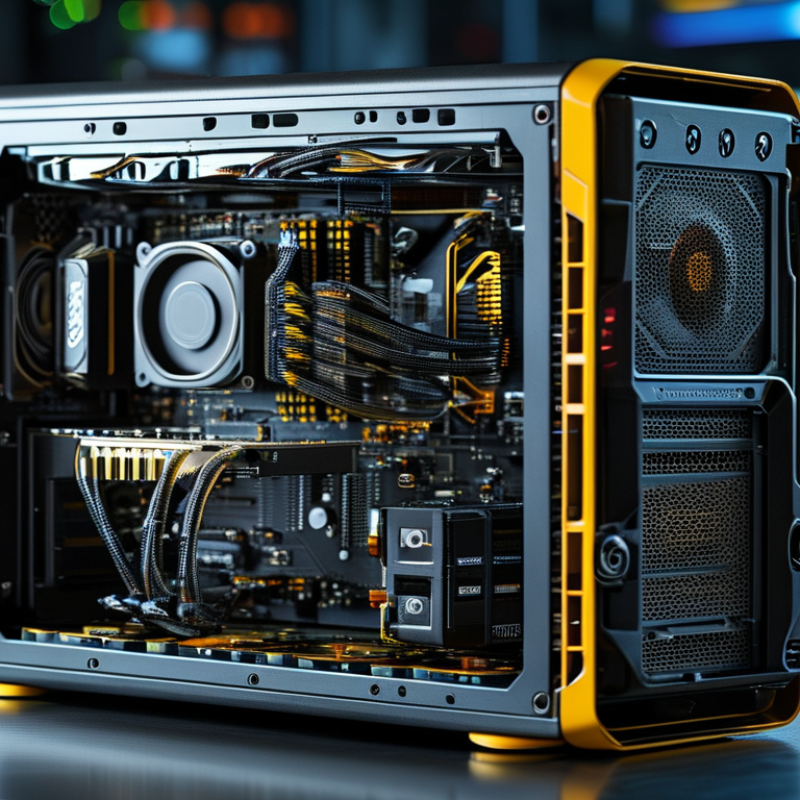
Artificial intelligence servers are specialized computing systems built to train, test, and run machine learning models. They combine powerful processors, large memory pools, fast storage, and high-speed network connections. Many also use accelerator cards that process thousands of calculations simultaneously. This structure helps servers recognize images, understand language, detect patterns, and generate predictions from complex datasets.
Their role extends beyond raw speed. During training, a server repeatedly examines examples and adjusts model parameters. This process may continue for hours or weeks. During inference, the same system responds to user requests, such as analyzing a medical image or forecasting equipment failure. Reliable cooling, backup power, and careful monitoring protect these workloads from interruptions. A well-configured server also controls access to sensitive data and records important system activity.
Performance figures can mislead. More processors do not always produce better results. Poorly matched memory, storage, or network capacity can create bottlenecks.
That assumption can fail.
In practical deployments, engineers test response time, energy use, maintenance needs, and workload stability. I have found that small configuration errors can become expensive after continuous operation. A balanced design is often more useful than the largest possible system. Even so, every environment has different demands, and server planning still involves uncomfortable trade-offs.
By 2026, the best AI server manufacturers will be judged by engineering depth, not glossy specifications. Core technologies include GPUs, custom AI accelerators, high-bandwidth memory, and PCIe 6.0 connectivity. CXL technology also helps servers share memory more efficiently. This matters when models expand beyond one machine. Fast networking fabrics reduce communication delays between computing nodes. Yet, raw speed is not enough. Stable power delivery and precise firmware tuning strongly affect real-world performance.
Thermal design has become equally important. Direct-to-chip liquid cooling removes heat more efficiently than traditional air cooling. The International Energy Agency reported that data centers consumed about 415 TWh of electricity globally in 2024. That figure could approach 945 TWh by 2030. Efficient servers therefore reduce both cooling demand and operating costs. Uptime Institute’s 2024 research also identifies power availability and sustainability as continuing data-center concerns. A small cooling failure can quickly become a major service interruption.
Tips: Request measured performance, power usage, noise levels, and repair procedures. Check whether the manufacturer validates systems under sustained AI workloads, not short benchmark bursts. No design is perfect. A server may deliver impressive training speed but struggle with memory expansion or maintenance access. Buyers should test those weaknesses before signing long-term contracts. Reliable documentation, traceable components, and responsive technical support remain practical signs of manufacturing maturity.
Representative theoretical bandwidth of key technologies used in modern AI servers. Values are shown in gigabytes per second (GB/s) and exclude protocol, software, and workload overhead.
High-bandwidth memory provides the highest local data throughput, while PCIe, CXL-class expansion, and high-speed Ethernet support accelerator connectivity, storage, and cluster-scale communication.
Choosing an AI server manufacturer requires more than comparing accelerator counts. IDC’s 2024 forecast placed global AI infrastructure spending at about $154 billion, showing how quickly procurement decisions are scaling. Buyers should match server design to workload type, including model training, inference, simulation, or mixed enterprise applications. Memory capacity, GPU-to-GPU interconnect speed, storage bandwidth, and supported software frameworks deserve equal attention. Peak performance alone can mislead.
Thermals matter. A serious evaluation should measure performance per watt under sustained workloads, not during a short benchmark burst. The MLCommons MLPerf Training results demonstrate how hardware, networking, and software optimization can change completion times. Manufacturers should provide reproducible test conditions, power readings, and failure-rate records. Without that evidence, impressive specifications remain partly promotional. No scorecard is perfect.
Reliability also affects the real cost of ownership. Uptime Institute’s 2024 Annual Outage Analysis reported that 54% of surveyed organizations experienced an outage costing more than $100,000. Buyers should therefore examine redundant power, liquid-cooling maintenance, firmware controls, remote diagnostics, and replacement-part availability. Service response times matter during a failed overnight training run. Security deserves practical testing, including secure boot, access logging, and controlled update procedures. A careful review should include five-year energy, cooling, licensing, and labor costs. Some evaluations still underweight installation complexity, which is an avoidable mistake.
Leading Artificial Intelligence Server Manufacturers in 2026 are competing through practical engineering, not only impressive specifications. The strongest manufacturers design systems for accelerated computing, high-speed networking, and efficient thermal control. Their platforms may combine advanced processors, specialized accelerators, large memory capacity, and modular storage. However, performance depends on workload design, software compatibility, and data-center conditions. A powerful server can still disappoint when cooling, power delivery, or maintenance planning is weak.
Reliable manufacturers also provide transparent testing, documented service procedures, and long-term component support. Buyers should examine benchmark methods carefully. Some results reflect ideal laboratory conditions. Real facilities face mixed workloads, restricted power budgets, and unexpected hardware failures. From an operational perspective, remote monitoring, replaceable components, firmware controls, and trained support teams can reduce downtime. Security deserves equal attention, including access management, secure boot options, audit logs, and controlled supply chains. No solution is perfect.
Tips: Compare performance per watt, not headline speed alone. Request workload-specific demonstrations before signing a contract. Check accelerator availability and replacement timelines. Ask who handles on-site repairs. Review software support for your preferred frameworks. Keep spare capacity for growth, because infrastructure plans often underestimate demand. Also, test noise and heat levels in a realistic room. Small details matter.
The 2026 artificial intelligence server market is moving beyond raw computing power. Buyers now compare accelerator density, memory bandwidth, network speed, and energy use. High-performance systems increasingly combine specialized processors with large shared memory pools. This design supports training, real-time inference, and complex simulation. Liquid cooling is also becoming more common, especially in dense data centers. It reduces heat, but installation and maintenance remain demanding.
Manufacturers are developing modular server platforms that can adapt as workloads change. This flexibility matters because inference demand may grow faster than training demand. Secure firmware, remote management, and transparent supply chains are becoming important purchasing criteria. Experienced IT teams also examine repair access and component life cycles. A fast server can still disappoint if replacement parts arrive slowly. That happens more often than expected.
Tips: Measure performance per watt, not only benchmark scores. Test systems with your real models and data patterns. Check cooling capacity before ordering dense hardware. Ask for independent reliability records and clear warranty terms. Leave room for future accelerators, networking upgrades, and memory expansion. No design is perfect. A careful pilot project can reveal noise, heat, and software compatibility problems before full deployment.
Manufacturer-neutral comparison of verified infrastructure standards, hardware specifications, energy trends, and expected 2026 development priorities.
| Category | Verified Data or Standard | 2026 Market Relevance | Expected Hardware Development | Reference |
|---|---|---|---|---|
| Data-Center Energy Demand | Global data-center electricity consumption was approximately 415 TWh in 2024 and is projected to exceed 945 TWh by 2030. | Energy efficiency, power availability, and operating cost will be major AI-server purchasing criteria. | Higher-performance compute nodes will increasingly be designed around performance per watt, workload scheduling, and power-capped operation. | IEA, Energy and AI |
| Host-to-Accelerator Interconnect | PCI Express 5.0 provides 32 GT/s per lane. A x16 link offers approximately 64 GB/s theoretical bandwidth per direction. | PCIe 5.0 remains a common baseline for accelerator, storage, and high-speed networking expansion. | Server platforms will continue moving toward PCIe 6.0 for greater device density and lower communication bottlenecks. | PCI-SIG PCI Express Specifications |
| Next-Generation I/O | PCI Express 6.0 increases signaling to 64 GT/s per lane and uses PAM4 signaling, FLIT encoding, and forward error correction. A x16 link reaches up to 128 GB/s per direction theoretically. | Useful for multi-accelerator servers, high-speed storage, and network adapters that require greater aggregate bandwidth. | AI server designs will increasingly use PCIe 6.0-ready motherboard layouts and signal-integrity engineering. | PCI-SIG PCIe 6.0 Specification |
| Accelerator Memory Bandwidth | HBM3 supports data rates up to 6.4 Gb/s per pin. With a 1,024-bit interface, one stack provides approximately 819 GB/s of theoretical bandwidth. | Memory bandwidth is a key differentiator for training, inference, scientific computing, and large language model workloads. | Future AI servers will emphasize more HBM capacity, wider memory fabrics, improved packaging, and reduced data movement. | JEDEC JESD238 HBM3 Standard |
| Memory Expansion and Pooling | Compute Express Link 2.0 introduced memory pooling and switching capabilities; later revisions extend fabric and coherency functions. | CXL can improve memory utilization by allowing capacity to be allocated according to workload demand. | AI server architectures are expected to adopt composable memory, disaggregated resources, and more flexible rack-level provisioning. | Compute Express Link Specifications |
| Scale-Out Networking | IEEE 802.3df-2025 defines Ethernet technology for 800 Gb/s operation, supporting higher-capacity data-center links. | Faster network fabrics help reduce synchronization and data-transfer overhead in distributed AI clusters. | Server designs will prioritize higher port density, optical interoperability, congestion control, and efficient collective communication. | IEEE 802.3df-2025 |
| Storage Architecture | NVMe specifications define a PCIe-based storage protocol with features such as namespaces, multipath I/O, and command sets optimized for solid-state storage. | Fast local storage supports dataset staging, checkpointing, vector databases, and retrieval-augmented inference. | AI servers will increasingly combine local NVMe capacity with shared storage and software-defined data pipelines. | NVM Express Specifications |
| Rack Power Distribution | Open Rack V3 designs use a 48 V DC rack-level power architecture to reduce distribution current compared with lower-voltage systems. | Higher rack power density requires improved busbars, power shelves, monitoring, redundancy, and facility-level planning. | AI infrastructure will move toward rack-scale power engineering instead of treating each server as an isolated unit. | Open Compute Project Open Rack Specifications |
| Thermal Management | ASHRAE data-center guidance recognizes air cooling, liquid cooling, and facility water systems as distinct thermal-management approaches. | Direct-to-chip and rear-door heat-exchanger solutions become more attractive as accelerator heat flux and rack power increase. | The 2026 market will favor modular cooling designs, leak detection, serviceability, and compatibility with existing data-center facilities. | ASHRAE Datacom Series |
| Firmware and Platform Security | NIST SP 800-193 recommends platform firmware resiliency through protection, detection, and recovery mechanisms. | Secure boot, signed firmware, hardware roots of trust, and remote attestation are increasingly important in shared AI infrastructure. | Server selection will place greater emphasis on lifecycle security, secure updates, supply-chain traceability, and rapid recovery. | NIST SP 800-193 |
| Lifecycle and Sustainability | The European Union Ecodesign framework and related sustainability policies encourage improved energy efficiency, material efficiency, repairability, and product information. | Procurement decisions will increasingly include total cost of ownership, component reuse, embodied carbon, and end-of-life handling. | Modular servers with replaceable accelerators, memory, storage, fans, and power components are likely to gain importance. | European Commission Ecodesign Framework |
: It is a computing system designed to train, test, and run machine learning models. It combines processors, large memory, fast storage, and strong network connections. Some systems include accelerator cards for parallel calculations.
It studies many examples repeatedly. The system adjusts model parameters after comparing predictions with expected results. Training may continue for hours or weeks. It consumes substantial energy.
Inference means using a trained model to answer new requests. For example, a server may analyze an image or forecast equipment failure. Response speed matters here. A slow result can weaken the entire service.
Processors, accelerators, memory bandwidth, storage speed, and network capacity all matter. Large processor counts cannot solve every problem. Weak memory or networking may create bottlenecks.
Dense hardware produces considerable heat during continuous operation. Liquid cooling can reduce temperatures in demanding data centers. However, installation and maintenance become more complicated. Heat remains an uncomfortable detail.
They should measure performance per watt, not only benchmark scores. Testing with real models and data patterns gives clearer evidence. Buyers should also inspect repair access, replacement times, and warranty terms.
Buyers increasingly compare accelerator density, shared memory, network speed, and energy use. Modular platforms can adapt when workloads change. Inference demand may grow faster than training demand.
A small pilot project can expose noise, heat, and software compatibility problems. Teams should confirm cooling capacity before ordering dense systems. They should reserve space for future memory, networking, and accelerator upgrades. No configuration is perfect.
Artificial intelligence servers are specialized computing systems designed to support demanding AI workloads, including model training, inference, data analysis, and high-performance computing. This article explains how an artificial intelligence server manufacturer combines advanced processors, accelerators, high-speed memory, efficient storage, fast networking, and reliable cooling systems to deliver powerful and stable infrastructure. It also examines essential evaluation criteria such as computing performance, energy efficiency, scalability, system compatibility, security, technical support, and total cost of ownership.
The article presents the leading artificial intelligence server manufacturers in 2026 through a technology-focused comparison rather than brand promotion. It highlights how manufacturers are responding to growing demand for faster processing, flexible cloud and edge deployment, liquid cooling, modular designs, and improved energy management. Future developments are expected to focus on more efficient hardware, integrated software ecosystems, enhanced workload optimization, and sustainable data-center operations, helping organizations build scalable AI infrastructure for evolving applications.
